
I started saving my veggie scraps to make my own veggie stock during the COVID lockdown, because, why not?
It was around this time that I really started thinking about my environmental impact and looking for more sustainable options. Anything that I purchased in a one-time-use container, I started to ask myself how I could make it instead. I’ve experimented with so many recipes, many of which will be showcased right here.
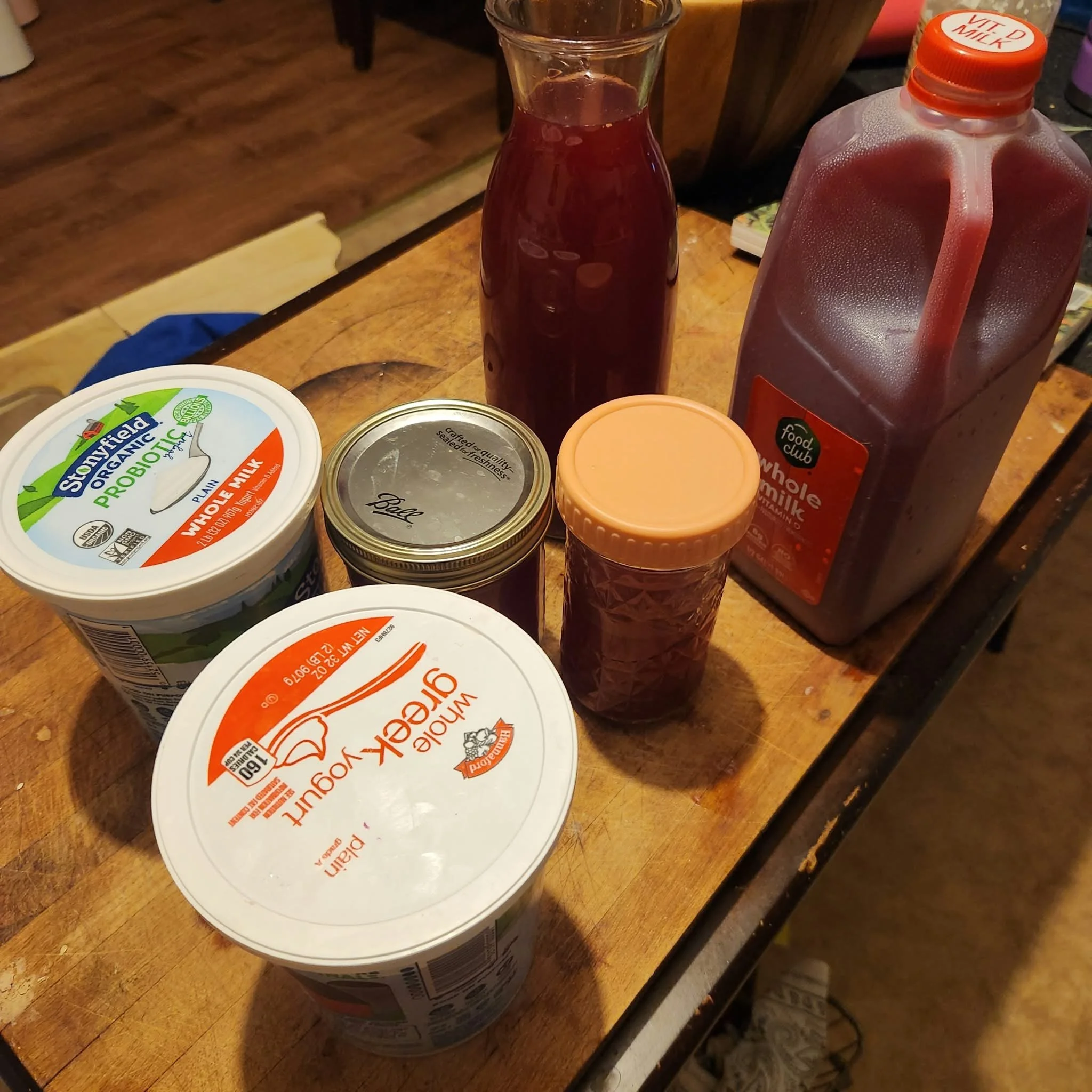
Homemade soup stock—red because I added beets!
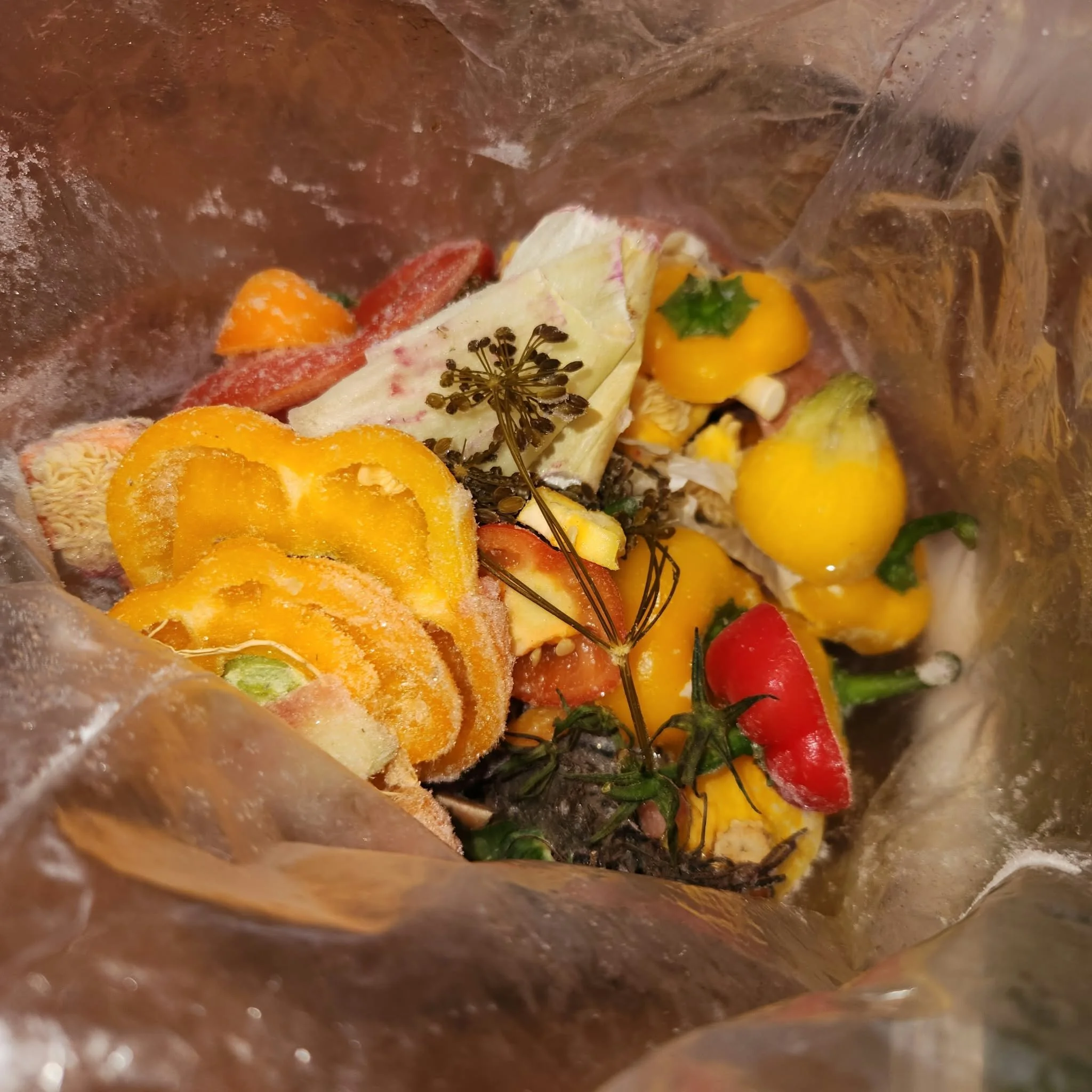
Soup stock was one of my first experiments because it's so easy. I love fresh vegetables, so I always have veggie scraps. Yes, I said veggie scraps! It took me a week or so to get into the habit of moving all my scraps into a bag in the freezer, where we keep them until it's time to make stock.
Recipe for Homemade Veggie Stock
Place your clean veggie scraps into a gallon-sized freezer bag as you collect them.
When the bag is full, empty it into a large pot. Add enough water to cover the veggie scraps.
Set the heat to high and bring to a boil.
Reduce the heat and gently simmer for approximately 45–60 minutes. Taste and adjust the cooking time depending on how strong you'd like the flavor.
Strain the stock, discarding the solids.
Cool promptly, dividing into smaller, shallow containers if necessary. Refrigerate within two hours.
If you're not using the veggie stock immediately, refrigerate for up to 3–4 days or freeze for longer storage (ideally within 4–6 months for best quality).
By using veggie scraps, I'm reducing kitchen waste and avoiding the packaging that would have come with store-bought stock. Many broth cartons aren't accepted by all recycling programs, either. Plus, making my own means I get to control exactly how much sodium goes into it!
What Should I Put in My Veggie Stock?
Just about any vegetable scraps! Onion peels, garlic peels, carrot peels, pepper membranes, etc. Whatever usable parts of your vegetables you're cutting off and don't plan to eat can potentially go into your veggie stock.
Important: Only use fresh, clean, food-safe scraps. Wash your produce before collecting the scraps, and never add anything moldy, spoiled, or from a part of a plant that isn't safe to eat. Freezing doesn't make spoiled food safe!
Don't limit yourself to vegetables! I sometimes add strawberry tops, apple peels, pineapple cores, and other fruit scraps for a slightly different flavor. Just remember that fruit can add sweetness or acidity to your stock. (I draw the line at banana peels…)
Seasoning is optional. You can add salt or other seasonings if you'd like. I prefer to leave mine unseasoned at this point so I can use the stock in several different recipes down the road.
Watch your proportions! If you have a lot of broccoli, cauliflower, or celery, don't add all of it to your veggie stock. Broccoli and cauliflower can make it bitter. Too much celery will make the whole broth taste like celery. (Ignore that advice if you love celery, I guess!)
Where Do I Use My Homemade Veggie Stock?
I use my homemade veggie stock just about anytime I'm cooking something that calls for water or broth. It's great in:
Soups
Stews
Rice
Beans
Pasta
Chili
Giving credit where it's due, I originally got the idea from this website:
How to Make Vegetable Broth with Kitchen Scraps – Little Broken
Like I said, making your own veggie stock is super easy, reduces kitchen waste, and adds so much more flavor to your recipes.
Thanks for reading!
💜
Laura
